
Polonnaruwa

Updated: Aug 26

Polonnaruwa Ancient City
The Timeless Heart of Sri Lanka’s Royal Heritage
The Polonnaruwa Ancient City is one of Sri Lanka’s most remarkable cultural treasures and one of the finest examples of the island’s ancient civilization. Rich in history, architecture, spirituality, and engineering brilliance, Polonnaruwa offers visitors a journey into the heart of Sri Lanka’s glorious royal past.
Once the second capital of Sri Lanka after the fall of Anuradhapura in 993 CE, Polonnaruwa rose to prominence as a flourishing center of governance, religion, trade, and culture. Today, its beautifully preserved ruins, sacred monuments, royal palaces, and stone-carved masterpieces continue to captivate travelers from around the world. UNESCO recognizes Polonnaruwa as a World Heritage Site, highlighting its outstanding cultural and historical value.
Why Visit Polonnaruwa?
Polonnaruwa is not just an archaeological site — it is a destination where history, spirituality, architecture, and nature come together in a truly unforgettable way. It is ideal for travelers who want to experience:
Ancient Sri Lankan history and royal heritage
UNESCO-listed cultural landmarks
Sacred Buddhist monuments and temples
Magnificent stone carvings and statues
Peaceful cycling and sightseeing experiences
Traditional irrigation and engineering marvels
Authentic cultural exploration beyond the beaches
For travelers seeking a deeper understanding of Sri Lanka, Polonnaruwa is one of the most meaningful places to visit.
History of Polonnaruwa
Polonnaruwa became the island’s major political and cultural center after the destruction of Anuradhapura in 993 CE. It reached its golden age during the reign of King Parakramabahu I in the 12th century, who transformed the city into a magnificent royal capital filled with palaces, monasteries, gardens, shrines, reservoirs, and civic structures. UNESCO describes the site as the monumental remains of a “fabulous garden-city” created during this period.
The city also reflects the influence of the Chola dynasty from South India, seen in several Hindu shrines and architectural elements found within the archaeological complex. This makes Polonnaruwa especially valuable because it represents a unique blend of Sinhala Buddhist heritage and South Indian cultural influence.
Polonnaruwa remained a major center for a relatively short period, but its legacy has lasted for centuries. Today, it stands as one of the best-preserved ancient cities in South Asia

Top Highlights of Polonnaruwa
1. Gal Vihara
The sacred Gal Vihara is one of the most iconic and admired monuments in Sri Lanka. This extraordinary rock temple features four magnificent Buddha statues carved into a single granite rock face, showcasing the artistic and spiritual excellence of ancient Sri Lankan craftsmanship.
The standing, seated, and reclining Buddha images are among the most photographed and revered sights in Polonnaruwa. The reclining Buddha, in particular, represents the Buddha entering Parinirvana, and is widely considered one of the most beautiful stone sculptures in Asia. Sri Lanka Tourism highlights Gal Vihara as one of the most important attractions in the area.
Why it matters:This is the spiritual and artistic highlight of Polonnaruwa, and for many visitors, the most unforgettable stop in the ancient city.

2. Polonnaruwa Vatadage
The Polonnaruwa Vatadage is one of the most elegant and architecturally refined structures in the ancient city. This circular shrine is believed to have once housed a sacred relic and is admired for its beautifully carved stone steps, moonstones, guard stones, and seated Buddha statues.
Its symmetrical design and sacred atmosphere make it one of the most visually striking ruins in Polonnaruwa.
Why it matters:It is one of the best places to appreciate the artistic sophistication and spiritual atmosphere of the ancient kingdom.

3. Royal Palace of King Parakramabahu
The ruins of the Royal Palace reveal the immense scale and grandeur of the ancient capital. This palace is believed to have once had multiple stories and hundreds of chambers, demonstrating the political power and royal prestige of Polonnaruwa during its golden age.
Though now in ruins, the massive brick walls still give visitors a strong sense of the magnificence that once defined the royal court.
Why it matters:This site helps visitors imagine the royal life, administrative strength, and urban sophistication of the kingdom.

4. Parakrama Samudra
The great Parakrama Samudra is one of the greatest engineering achievements in Sri Lankan history. This vast man-made reservoir was commissioned by King Parakramabahu I and remains a symbol of his famous vision that not even a drop of rainwater should be wasted.
UNESCO and its recent site reporting continue to identify the great artificial reservoir as one of the defining values of Polonnaruwa’s outstanding heritage.
Why it matters:It shows the incredible engineering knowledge, agricultural planning, and environmental understanding of ancient Sri Lanka.

5. Quadrangle (Dalada Maluwa)
The Quadrangle is one of the most concentrated and sacred areas of the ancient city. It contains several important religious monuments within a compact archaeological zone, including:
Vatadage
Thuparama Image House
Hatadage
Atadage
Sathmahal Prasada
This area is ideal for travelers who want to explore Polonnaruwa’s religious and architectural richness in one walkable section.
Why it matters:It is one of the most photogenic and historically important parts of the ancient city.

6. Rankoth Vehera
The towering Rankoth Vehera is one of the largest stupas in Sri Lanka and a powerful symbol of the island’s Buddhist heritage. Its impressive scale and serene setting make it a memorable stop for both spiritual travelers and history lovers.
Why it matters:It reflects the religious devotion and monumental architectural ambition of the Polonnaruwa era.
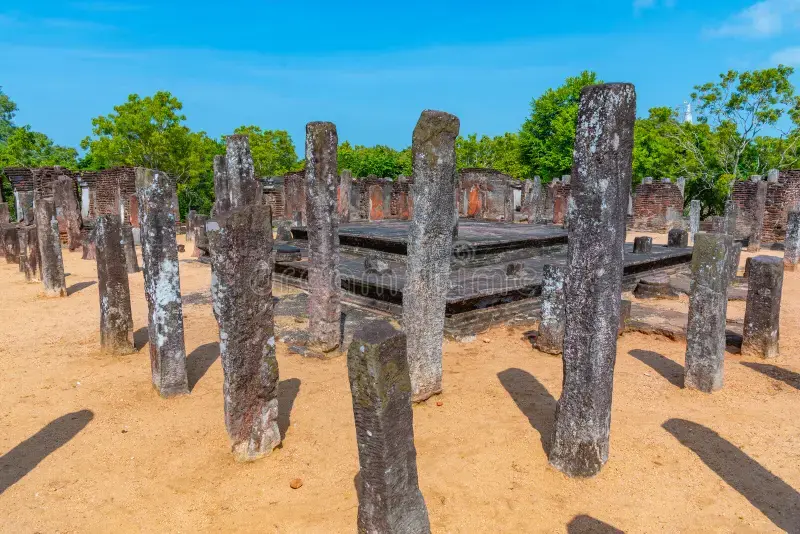
7. Alahana Pirivena
Alahana Pirivena was one of the great monastic and educational complexes of ancient Polonnaruwa. Sri Lanka Tourism notes that it was developed as a major Buddhist monastic center where monks were educated during the Polonnaruwa period.
Why it matters:It shows that Polonnaruwa was not only a royal capital, but also an important center of Buddhist learning and scholarship.
What Makes Polonnaruwa Special?
Historical Value
Polonnaruwa preserves the story of one of Sri Lanka’s greatest royal periods.
Architectural Value
Its palaces, stupas, image houses, and stone shrines reveal remarkable craftsmanship and planning.
Spiritual Value
The city remains deeply connected to Buddhist heritage and sacred traditions.
Engineering Value
Its irrigation systems and reservoirs show exceptional ancient knowledge and sustainability.
Travel Value
It is highly accessible, easy to explore, and one of the most rewarding cultural experiences in Sri Lanka.
Top Experiences
Explore the ancient ruins by bicycle
Visit the sacred Buddha statues at Gal Vihara
Walk through the Quadrangle archaeological zone
Admire the moonstones, carvings, and stone architecture
Enjoy views near Parakrama Samudra
Learn about Sri Lanka’s royal and Buddhist history
Combine Polonnaruwa with Sigiriya and Minneriya in one itinerary
How Long Should Travelers Stay?
Polonnaruwa is ideal as a:
Full-day cultural excursion
One-night heritage stop
Part of a 2–3 day Cultural Triangle journey
Recent UNESCO periodic reporting notes that the average visitor stay at the World Heritage property is generally one day, making it a perfect day visit while still offering enough depth for a longer cultural stay.
Recommended stay:1 full day is enough to see the main highlights comfortably, but 1 night is even better if travelers want a more relaxed experience.
Who Should Visit Polonnaruwa?
Polonnaruwa is perfect for:
History lovers
Cultural travelers
Spiritual and heritage travelers
Families interested in educational travel
Photographers
Architecture enthusiasts
Travelers exploring Sri Lanka’s Cultural Triangle
It is also an excellent destination for travelers who want something authentic, meaningful, and different from a typical beach holiday.
Best Time to Visit Polonnaruwa
Polonnaruwa can be visited throughout the year, but the best experience is usually in the morning or late afternoon, when the weather is cooler and the light is better for photography.
Best visiting tips
Start early to avoid midday heat
Wear light, breathable clothing
Carry water and sun protection
Wear comfortable walking shoes
Dress respectfully for sacred sites
Bring a hat or umbrella during hot days
Travel Tips for Visitors
Here are some practical details you can include for tourists:
Visitor Tips
Exploring by bicycle is one of the best ways to enjoy the site
Some areas require walking between ruins, so comfortable footwear is important
Sacred places such as Gal Vihara should be visited respectfully
Photography is excellent in the early morning and golden hour
Hiring a guide can greatly enrich the historical experience
Why Polonnaruwa Is Worth Visiting
Polonnaruwa is worth visiting because it offers much more than ruins — it offers a complete experience of Sri Lanka’s royal past, spiritual heritage, artistic excellence, and cultural identity. It is one of those rare places where travelers can feel both inspired and humbled at the same time.
For visitors who want to understand the true depth of Sri Lanka beyond beaches and scenery, Polonnaruwa is an essential destination.
Where is Polonnaruwa
Polonnaruwa is located in Sri Lanka’s North Central Province. The map below shows the location of the ancient city of Polonnaruwa within Sri Lanka.


Comments